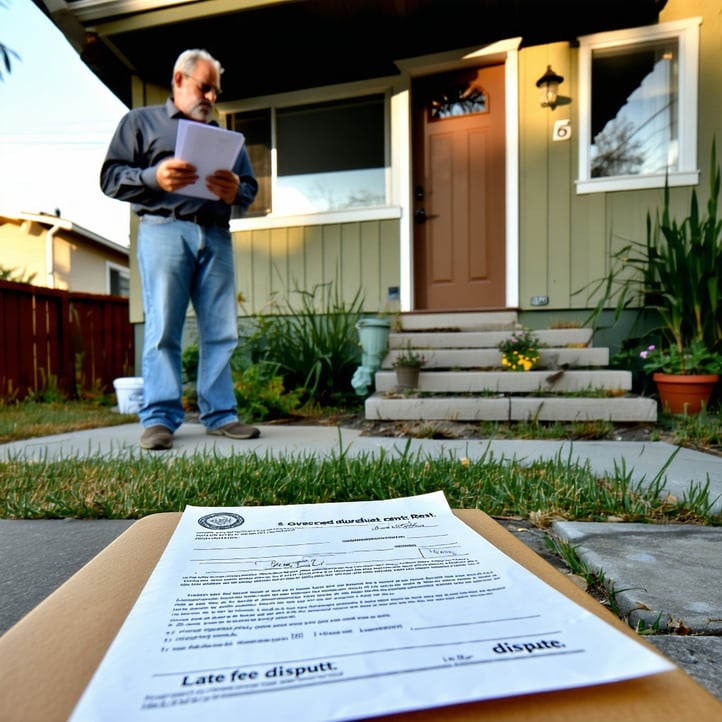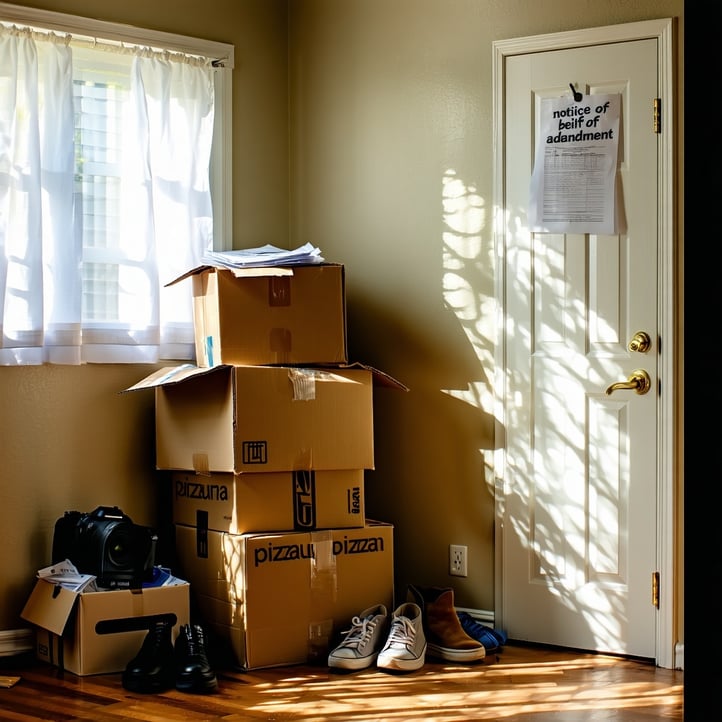
If you just found out you inherited a rental property in California, and there is a tenant living in it, you are probably feeling two things at once: the weight of losing someone, and the quiet panic of owning something you never asked for. A house in a state you may not even live in, with a stranger in it, under laws you have never read.
Take a breath. You have more time, more rights, and more options than it feels like right now. This is a plain-English guide to what you actually inherit when you inherit a tenant-occupied rental in North County San Diego, what California requires of you in the first month, and how to think clearly about the question everyone asks: keep it, or sell it? It is general information for owners, not legal advice for your situation; for your own property, talk to your attorney or reach out to us.
When you inherit a rental, you inherit more than a building
Let me tell you about an owner I will call Mark, because his situation is one I see all the time. Mark lived in Denver. He got the call that his mom had passed, and somewhere in the middle of everything else, he learned he had inherited her condo in Oceanside. And there was a tenant living in it.
Mark's first instinct was the one almost everyone has: just sell it, take the cash, and be done. Reasonable. But here is what trips up nearly everybody who inherits a rental. When you inherit a property with a tenant in it, you do not just inherit the building. You inherit their lease, you inherit their security deposit, and you inherit every California landlord obligation that comes attached.
So before you call a cash buyer, it is worth understanding what you are actually holding.
You inherit the lease (it did not end when the owner passed)
The single biggest misconception is that the lease dies with the previous owner. It does not. In California, a change of ownership does not cancel an existing lease, whether the property changes hands by sale, by gift, or by inheritance. The new owner steps into the shoes of the old one and takes the property subject to the lease that is already in place.
In practice that means:
- If the tenant has a fixed-term lease (say, a 12-month lease with six months left), they have the right to stay through that term. You cannot shorten it because you would rather sell the place empty.
- The tenant keeps paying rent, but now they pay it to you, and every other term of the lease stays in force.
- You inherit the landlord side of the deal too: repairs, habitability, returning the deposit correctly, all of it.
You are the landlord now, whether you planned to be or not. The good news is that a paying tenant in a managed property is income, not a burden, once it is set up correctly.
The security deposit is now your responsibility
That deposit the previous owner collected at move-in? It is now your legal responsibility to account for and return the right way, even though you never touched the money.
Under California Civil Code Section 1950.5, when ownership of a rental changes hands "by sale, assignment, death, appointment of receiver, or otherwise," the deposit has to be handled in one of two ways: either it gets refunded to the tenant, or it gets transferred to the new owner (you), who then becomes responsible for it. The tenant also has to be notified in writing of the transfer and who is now holding their money.
Why this matters so much for an inheritor: if you cannot show what the deposit was and document the unit's condition, you can end up paying out of your own pocket at move-out for damage you had nothing to do with. One of the first things we do when we take over an occupied property is get a copy of the lease, send the tenant the required notice that the deposit and management are transferring, and document the property properly so the deposit is protected from day one.
Why you cannot simply remove a settled tenant to sell empty
This is the one that surprises out-of-state inheritors the most. You generally cannot tell a tenant who has lived there for years to pack up so you can sell the place vacant.
A couple of California rules are at work:
- Notice. For a month-to-month tenant who has lived in the unit for a year or more, ending the tenancy requires at least a 60-day written notice (Civil Code Section 1946.1), not the 30 days many people assume.
- Just cause. Under the Tenant Protection Act (AB 1482, Civil Code Section 1946.2), once a tenant has been there 12 months, a landlord generally needs a valid "just cause" to end the tenancy, and certain no-fault reasons trigger relocation assistance. There is an exemption for many single-family homes and condos, but only if the owner is not a corporate entity and gives the tenant the specific written exemption notice the law requires. Miss that notice and the exemption may not protect you.
The honest takeaway is not "you can never sell." It is "you cannot just empty it out on your own timeline, and the rules depend on the property and on notices most new owners do not know they are required to give." This is exactly the kind of compliance we handle so an out-of-area owner does not step on a rake they could not see.
If you live out of state, California still wants its cut
Here is one almost no inheritor knows about until a notice shows up. If you own California rental property but live in another state, California requires part of your rental income to be withheld for state taxes.
Under Revenue and Taxation Code Section 18662, rent paid to an out-of-state owner on California property, in the course of a property manager's or agent's business, is generally subject to 7% state tax withholding once the yearly total crosses a small threshold. When we manage for an out-of-state owner, we handle that withholding and remit it to the Franchise Tax Board on a quarterly schedule, so you stay compliant without having to learn California tax law from a thousand miles away. (You can sometimes apply for a reduced or waived rate; that is a conversation for your tax advisor.)
It is not a huge lift when someone is doing it for you. It is a genuine headache when you find out about it after the fact.
Your first 30 days as an accidental landlord
If you take nothing else from this, take this short list. In roughly your first month, you want to:
- Find the lease and read it. Term, rent, deposit amount, who is on it.
- Locate the security deposit records and the move-in condition documentation, if any exists.
- Notify the tenant in writing that ownership has transferred, who manages the property now, and where to send the rent.
- Keep collecting rent on schedule. Do not let payments lapse into confusion while the estate settles.
- Sort out insurance. A landlord policy is different from a homeowner policy, and an inherited property may be underinsured or insured under a policy that no longer applies.
- Figure out the tax piece if you are out of state (the FTB withholding above).
- Decide who handles the 11 p.m. water-heater call. Because it will come, and from Denver you cannot meet a plumber.
You do not have to do all of this alone, and you do not have to do it fast. You have to do it correctly.
Keep it or sell it? Think it through before you decide
Mark's instinct was to sell. A lot of inheritors feel that pull, usually out of stress rather than math. Before you commit, it helps to lay the two paths side by side.
| Question | Keeping it (and managing it well) | Selling it |
|---|---|---|
| Speed | Tenant stays, rent continues, no rush | Limited by the lease; you may have to wait out the term or sell with the tenant in place |
| Income | Monthly rental income, paid reliably | One-time lump sum |
| The tenant | Stays put; you honor the lease | You generally cannot deliver it vacant on demand |
| Taxes | Ongoing income (and out-of-state withholding) | Capital gains, though inherited property often gets a stepped-up basis: ask your CPA |
| Effort | Low, if a manager runs it for you | High up front, then done |
| Long game | An appreciating North County asset working for you | Cash now, asset gone |
There is no universally right answer. But notice what happened with Mark. Once the property was running smoothly, the rent was landing in his account on the same day every month, the tax piece was handled, and someone local was taking the maintenance calls, the pressured fire-sale stopped looking smart. He kept it. It became income instead of a crisis.
The mistake is not choosing to sell. The mistake is choosing in a panic, in week one, before you have seen what the property can do when it is managed right.
What this means if you inherited a rental in North County San Diego
If the property you inherited is a single-family home or condo in Oceanside, Carlsbad, Vista, Encinitas, San Marcos, Escondido, or anywhere across North County, and especially if you are managing it from out of the area, this is squarely what we do. We take over occupied properties without disrupting the tenant: honor the existing lease, send the required transfer notices, move the tenant onto online rent payments, document the property to protect the deposit, handle the out-of-state tax withholding, and take the maintenance calls locally. You get the income and the appreciation; you skip the 11 p.m. phone calls and the compliance landmines.
If you want the California compliance essentials in one place, the deposit rules, a tenant-screening process that protects you, and the records to keep you tax-ready, we put them in our free Carlsbad Landlord's Profit Protection Kit. Grab it below.
Frequently asked questions
Do I have to honor the existing lease on a rental property I inherited in California?
Yes. A change of ownership, including by inheritance, does not end an existing lease in California. The new owner takes the property subject to the lease, and a fixed-term tenant generally has the right to stay through the end of the term.
What happens to the tenant's security deposit when I inherit the property?
Under Civil Code Section 1950.5, the deposit is either refunded to the tenant or transferred to the new owner, who becomes responsible for accounting for it and returning it correctly. The tenant must be notified in writing of the transfer and who now holds the deposit.
Can I evict the tenant so I can sell the inherited property empty?
Usually not on your own timeline. A month-to-month tenant of a year or more is entitled to at least 60 days' notice (Civil Code Section 1946.1), and AB 1482 (Civil Code Section 1946.2) generally requires just cause after 12 months, with a single-family or condo exemption that only applies if you are a non-corporate owner and give the required written notice.
I live out of state. Do I owe California taxes on the rental income?
Generally California requires 7% withholding on rental income paid to out-of-state owners under Revenue and Taxation Code Section 18662, remitted to the Franchise Tax Board. A property manager handles this for you. Talk to your tax advisor about reduced-withholding options.
Should I keep the inherited rental or sell it?
It depends on your goals, the lease, and the numbers. Many inheritors who feel pressure to sell quickly find that once the property is professionally managed and producing reliable income, keeping it is the stronger long-term move. Run the comparison before deciding in a stressful first week.
Raintree Property Management provides full-service property management for single-family homes and condos across North County San Diego, including Carlsbad, Encinitas, Oceanside, San Marcos, Vista, Escondido, Del Mar, and Solana Beach. CalDRE #02073946. This article is general information for rental owners and is not legal or tax advice; for guidance on your specific situation, consult your attorney or tax advisor.
Want a deeper reference for California landlord compliance, screening, and tax tracking? The Profit Protection Kit is a free four-document set: a CA compliance checklist, screening red-flags worksheet, rental tax tracker spreadsheet, and the current North County rental market snapshot. No phone call, no sales follow-up. Read at your pace.
Raintree Property Management, CalDRE 02073946.