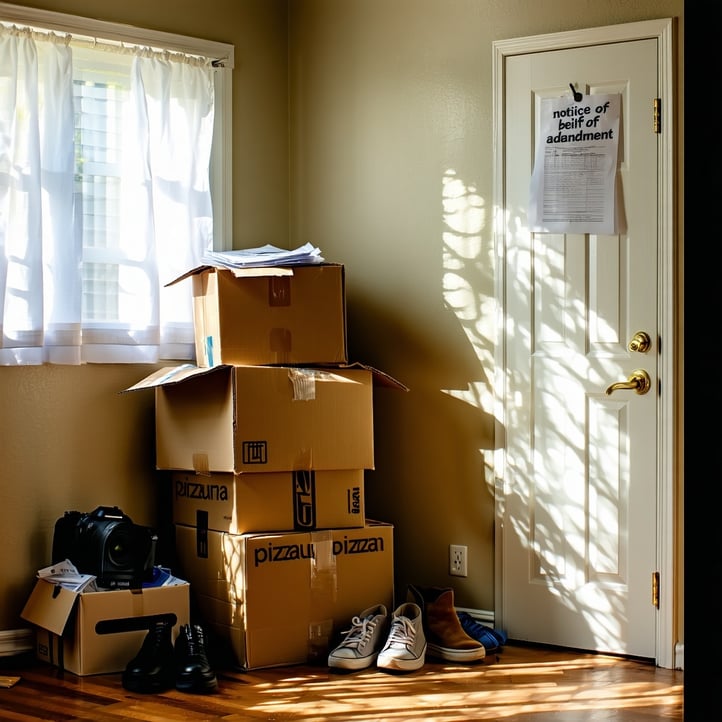
For any tenancy that started on or after July 1, 2025, California requires you to photograph the house at move-in. Skip it and you've lost the baseline you need to deduct for damage when the tenant moves out.
The short answer: take dated photos of every room, the exterior, and every appliance immediately before or at the start of the tenancy (Civil Code section 1950.5(g)(1)). Pair them with a written checklist the tenant sees. The law requires the photos. The checklist is our practice, and it's the cheapest insurance in this business. We're property managers, not attorneys, so confirm anything that matters with a California attorney.
Jump to a section:
What the law requires at move-in
Why the move-in record decides the deposit
The photo timeline, start to finish
Room-by-room checklist for a house
How to take photos that hold up
Tenant review and sign-off
When you can't be at the house
Mistakes that cost owners deductions
What the law requires at move-in
Assembly Bill 2801 added photo rules to Civil Code section 1950.5, the security deposit statute. Section 1950.5(g)(1) says that for tenancies beginning on or after July 1, 2025, the landlord takes photographs of the unit immediately before, or at the inception of, the tenancy.
That's the whole move-in requirement in the statute. It doesn't list rooms. It doesn't require a written checklist, a tenant signature, or a set retention period. Everything else in this post sits on top of that one sentence, and we'll label which parts are law and which parts are how we'd do it.
If your tenant moved in before July 1, 2025, the move-in photo rule doesn't reach that tenancy. The move-out photo rules below already apply to you, though, and without a move-in record you're comparing the move-out photos to your memory.
Why the move-in record decides the deposit
Section 1950.5(e) limits deductions for damage and cleaning to what's reasonably necessary to return the house to the condition it was in when the tenancy started. You can't charge for ordinary wear and tear, and you can't charge to fix something that was already there on day one.
So every deduction you take at move-out depends on a fact you had to record at move-in. A carpet stain in month 14 is only the tenant's if you can show the carpet was clean in month 1. Without that, it's your word against theirs, and in a deposit dispute section 1950.5 puts the burden on the landlord to prove the amounts claimed were reasonable. A bad faith retention exposes you to statutory damages of up to twice the deposit, on top of actual damages.
That's why we treat move-in day as the day the deposit gets decided. The move-out is just when you find out how it went. For the deposit amount itself, see how much security deposit a landlord can charge in California.
The photo timeline, start to finish
The move-in photos are the first of up to three photo sets the statute names. The other two happen at move-out, and they only matter if you plan to deduct for repairs or cleaning.
| Photo set | Applies when | Timing | Source |
|---|---|---|---|
| Move-in | Tenancies starting on or after July 1, 2025 | Immediately before, or at the start of, the tenancy | Civ. Code 1950.5(g)(1) |
| After move-out, before work | Since April 1, 2025, when you'll deduct for repairs or cleaning | Within a reasonable time after the tenant returns possession | Civ. Code 1950.5(g)(2) |
| After repairs or cleaning | Same | Within a reasonable time after the work is done | Civ. Code 1950.5(g)(2) |
| Photos go to the tenant | Any deduction for repairs or cleaning | With the itemized statement, no later than 21 calendar days after the tenant vacates | Civ. Code 1950.5(h)(1), (h)(2)(D) |
One more piece from section 1950.5(h)(4)(A): the photo and receipt paragraphs don't apply when your repair and cleaning deductions total $125 or less. That carve-out is small. Plan on the photos every time.
The back half of this timeline has its own posts. The tenant's right to request an initial inspection before moving out is in section 1950.5(f): the inspection happens no earlier than two weeks before the tenancy ends, with at least 48 hours' written notice. We walk through it in how to handle a pre-move-out walk-through. The 21-day statement is in how to return a tenant's security deposit.
Room-by-room checklist for a house
Most checklists online are written for apartments. A house has a yard, a garage, a water heater, and a lot more exterior that the tenant is living with. Here is what we'd capture on a North County single-family home. Photograph each item and note its condition in writing at the same time.
| Area | What to capture |
|---|---|
| Front of house and yard | Exterior paint, fencing and gates, irrigation heads, landscaping, the condition of the lawn the day you hand it over |
| Garage and driveway | Oil stains, garage door and opener, every remote you hand over, anything stored that stays |
| Entry and living areas | Floors close up (scratches, carpet stains), walls and baseboards, window screens and blinds, light fixtures |
| Kitchen | Inside and outside of every appliance, countertop chips and burns, cabinet doors and hinges, under the sink |
| Bathrooms | Grout and caulk, tub or shower surface, toilet, vanity top, exhaust fan, any existing water staining |
| Bedrooms and closets | Carpet or flooring, closet doors and tracks, walls where furniture rubs |
| Systems | Water heater, HVAC filter date, smoke and carbon monoxide alarms, the electrical panel |
| Keys and counts | Every key, fob, and remote by count, plus meter readings if the tenant takes over utilities |
If the house has a pool or spa, add the equipment, the plaster or tile line, and the cover. If a repair is still open on move-in day, write it down with a date. A known issue on the checklist protects you better than a known issue nobody wrote down.
Move-in day is also where habitability problems show up before they turn into a dispute. A slow drain or a dead outlet found at the walk-through is a work order. Found six months later, it's a complaint.
How to take photos that hold up
The statute says photographs. It doesn't say how many. Here is what we've learned from move-outs.
Shoot each room twice. One wide shot from the doorway shows the whole room. Then close-ups of anything with a mark, chip, or stain, with something in frame for scale.
Keep the date. Phone photos carry a timestamp in the file. Don't strip it, and don't screenshot them, which creates a new file with a new date.
Store the originals in one dated folder with the address and move-in date in the name. Back it up. You'll need it at move-out, whenever that is, and phones get replaced.
Regular photos miss things. We use a 360 degree camera for every move-in and move-out evaluation, so each room is captured the way a virtual tour is. Those images go into a PDF report. We charge $125 for that, and it saves owners a lot more than that.
Tenant review and sign-off
Nothing in section 1950.5 requires the tenant to sign a move-in checklist. We'd still give them one.
Hand the tenant the written checklist at move-in, give them a short window to add anything you missed, and keep their returned copy with the photos. If they note a scratch you didn't see, better to hear it in week one. A tenant who signed off on the condition of the house has their own signature to argue with later.
When you can't be at the house
Out-of-area owners, military owners on orders, and people who inherited a house in another city run into the same problem: the photos have to happen at the start of the tenancy, and they aren't there.
You have two options. Hire someone local to do the walk-through and send you every dated original file. Or hand the whole move-in to a manager. We cover the rest of remote ownership in managing a rental property from out of state, and if the house is near Camp Pendleton, our Oceanside property management page shows how we handle it there.
Mistakes that cost owners deductions
Photos with no wide shots. A close-up of a scratch proves a scratch exists. It doesn't prove which wall it's on.
Photos taken a week early. The statute says immediately before or at the start of the tenancy. If your painter touched up three walls after you took pictures, your photos show the wrong house.
No move-in photos at all, then deducting anyway. Without a baseline, you can't show the condition changed. That turns a simple deduction into a dispute.
Losing the files. Photos on an old phone or in a former manager's account do you no good at move-out.
Treating the checklist as a form. A checklist with "good" written next to every room tells a judge nothing. Specific notes do.
Move-in documentation is one step in a longer sequence. If this is your first rental, start with how to rent out your house.
Frequently asked questions
Do California landlords have to take photos at move-in?
Yes, for tenancies that begin on or after July 1, 2025. Civil Code section 1950.5(g)(1) requires the landlord to photograph the unit immediately before, or at the start of, the tenancy.
When do the move-out photos have to be taken?
Section 1950.5(g)(2), in effect since April 1, 2025, requires photos within a reasonable time after the tenant returns possession and before any repairs or cleaning you plan to deduct for, and again within a reasonable time after those repairs or cleanings are done.
Do I have to send the tenant the photos?
If you deduct for repairs or cleaning, yes. Section 1950.5(h)(2)(D) has you send the photos with the itemized statement, by mail, email, computer flash drive, or a link to view them online. The statement goes out no later than 21 calendar days after the tenant vacates.
Does California law require a written move-in checklist?
Section 1950.5 doesn't require one, and it doesn't require the tenant to sign anything at move-in. We'd do both anyway. A dated checklist the tenant has seen is the easiest evidence you'll ever have of what the house looked like on day one.
How long should I keep move-in photos?
Section 1950.5 doesn't set a retention period. Keep them for the whole tenancy and through the deposit return, plus whatever time your attorney recommends after that.
Is this legal advice?
No. We're property managers, not attorneys. This post summarizes what the statute says and how we'd set up the paperwork. A California attorney answers questions about your situation.
Raintree Property Management provides full-service property management for single-family homes and condos across North County San Diego, including Carlsbad, Encinitas, Oceanside, San Marcos, Vista, Escondido, Del Mar, and Solana Beach. CalDRE #02073946. We are property managers, not attorneys: this article is general information about California's move-in photo requirements, not legal advice, and it doesn't address your situation. Statute text checked November 16, 2026. Confirm anything that matters with a qualified California attorney.
Want a deeper reference for California landlord compliance, screening, and tax tracking? The Profit Protection Kit is a free four-document set: a CA compliance checklist, screening red-flags worksheet, rental tax tracker spreadsheet, and the current North County rental market snapshot. No phone call, no sales follow-up. Read at your pace.
Raintree Property Management, CalDRE 02073946.