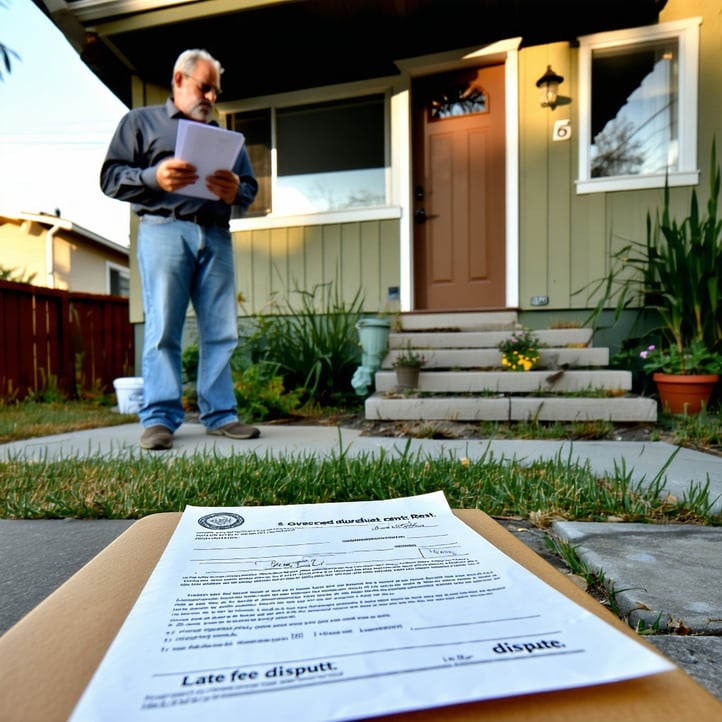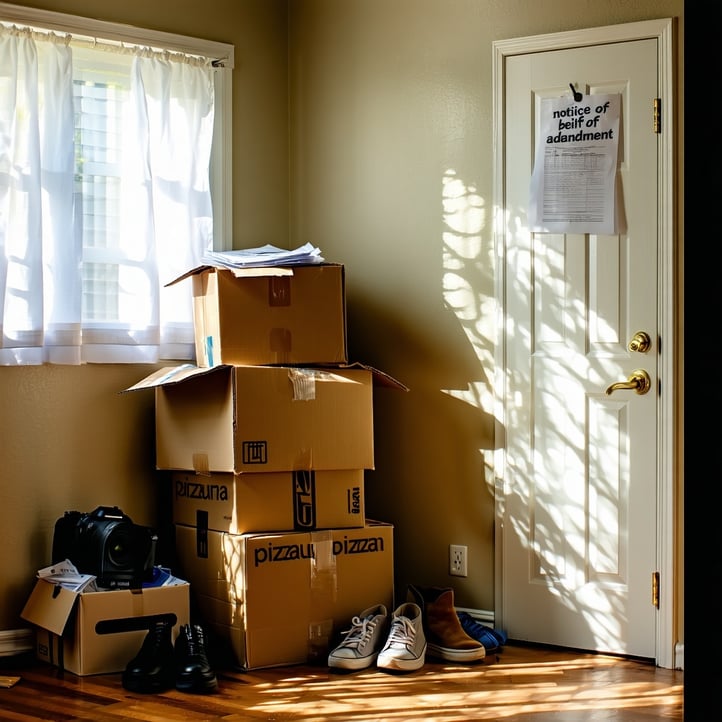
Almost every guide about managing a rental property from out of state is written for an investor who lives somewhere else and buys a rental here. This one is for the opposite person: the owner who already has the house and is the one leaving. The military family with PCS orders. The engineer whose company moved the job to Austin. The couple relocating to be near grandkids who decided the North County house was worth keeping.
The short version: managing from out of state works fine if you replace yourself with systems before you go, and badly if you plan to run it from your phone on goodwill. Before the moving truck leaves you want five things in place: a realistic rent from a real comp, a way for repairs to get handled fast without a three-time-zone approval loop, documented move-in condition you can enforce from anywhere, a plan for California's nonresident tax withholding (yes, that's a thing, and it's 7%), and a communication setup that doesn't depend on you being awake in the right time zone. Here's what that looks like in practice.
Jump to a section:
The day the orders land
What actually breaks when you manage from far away
Who fixes the water heater when you're 2,600 miles away
How you get paid (and why the date matters)
The 7% California takes: FTB nonresident withholding
The rules don't move with you
Showings, screening, and your eyes on the property
Military owners: the PCS version
DIY from a distance vs a local manager
The day the orders land
I'll call them the Carters, for the purpose of this post. A Camp Pendleton family with a house in Oceanside they'd bought a few years earlier, orders to the East Coast, and about eight weeks to figure everything out. Their first question wasn't a property management question at all: should we sell it or rent it? If you're standing at that same fork, start with our guide to whether to rent or sell your house; it walks through the math and the tax window that lets you rent for a few years and still sell later. The Carters ran that math, looked at their interest rate, and decided the house was staying.
Which is when the real question showed up: who runs a rental house when the owner is 2,600 miles away? Their list of worries will look familiar if you're in the same spot. Who fixes things? How do we get paid? What if the tenant stops paying? And what does California do to landlords who don't live in California anymore?
What actually breaks when you manage from far away
The standard advice in the national guides is some version of "build a network of trusted local contractors before you leave." That's lovely advice for someone with two years and a golf membership. A family PCS-ing on eight weeks' notice is not going to assemble a vetted bench of plumbers, electricians, and handymen between the movers and the DMV. A working vendor bench takes years of repeat work to build, which is exactly why it's one of the main things you're buying when you hire local help.
Here's what distance actually breaks, in our experience: speed and presence. Speed, because every repair now waits on an owner who is asleep when the tenant calls, in a meeting when the plumber quotes, and three time zones behind the whole conversation. And presence, because you can no longer drive by, and California law strictly limits when a landlord can enter an occupied rental anyway, so "I'll just swing by and check on it" was never the plan you thought it was. Both problems have systems-shaped solutions.
Who fixes the water heater when you're 2,600 miles away
The speed problem is why we run a $500 maintenance reserve for every owner, local or not. Repairs under $500 get handled immediately, no approval loop; anything above $500, you hear from us first. For an out-of-state owner this threshold stops being a convenience and becomes the whole ballgame: a dripping faucet that waits nine days on a reply-all across time zones isn't a $200 repair anymore, it's a tenant quietly deciding not to renew. Minor repairs handled fast cost less and keep tenants longer, and for an owner far away, tenant retention is the single biggest lever on your net income. Our guide to budgeting for rental property maintenance covers the bigger picture.
The presence problem is solved with documentation and a legal, scheduled look at the property. Once a year we offer tenants a maintenance review: our team walks the property, checks for wear and tear, and logs everything in a shared sheet with photos, so the owner in Virginia sees exactly what the owner in Vista would. Approvals happen from your phone, from any time zone, with estimates attached. It's your eyes on the property, done inside California's entry rules rather than around them.
How you get paid (and why the date matters)
When you lived here, a rent check that showed up "sometime that week" was an annoyance. When the rental income is landing in an account you manage from Norfolk or Denver, predictability matters more. We pay owners on the 12th of each month by ACH, and there's a reason it's the 12th: rent is due on the 1st but isn't late until the 5th, most tenants pay by ACH which takes 3 to 4 business days to clear, and weekends and holidays do what they do. The 12th is the earliest date we can hit consistently, every month, and consistency is the point. You should know the date your rent arrives the same way you know payday.
The 7% California takes: FTB nonresident withholding
Here's the one that surprises nearly every owner who moves away, and that none of the national guides mention: once you're no longer a California resident, the state requires 7% of your gross rental income to be withheld and sent to the Franchise Tax Board. Not profit. Gross. This isn't your property manager being difficult; California makes the property manager the withholding agent, so a professional manager is required to withhold it and remit it to the FTB on the state's quarterly schedule, which we handle for our out-of-state owners as part of the service.
Two pieces of good news. First, it's a prepayment, not an extra tax: the withheld amounts are credited against your California taxes when your CPA files your nonresident return. Second, you can apply to the FTB for a waiver or a reduced withholding amount (the waiver request is Form 588), and if the state grants it, the withholding stops or shrinks. Talk to your CPA about whether applying makes sense for your situation; that part is tax strategy, and we stay in our lane. What you don't want is to find out about the 7% for the first time when your first owner statement is smaller than the mortgage math you did in your head.
The rules don't move with you
Your house stays under California landlord-tenant law no matter what state you file taxes in, and that law keeps changing after you stop reading local news. A few examples with teeth. The security deposit is now capped at one month's rent for most landlords; if you last rented a house out years ago, or you're reading an older national guide that still says two or three months, that advice is stale, and we covered the current rules in our guide to how much security deposit a landlord can charge in California. When a tenancy ends, you have 21 days to return the deposit with an itemized statement, whether you live in Carlsbad or Charlotte. Screening criteria have to be written down and applied identically to every applicant, because fair housing enforcement does not care that you were managing in good faith from far away. And the lease itself needs this year's California addendums, which change often enough that the lease you downloaded when you moved in is already out of date.
None of this is a reason to sell. It's a reason to make sure whoever is running the property, you included, is current on the rules every single year.
Showings, screening, and your eyes on the property
The part of remote ownership people dread most, filling a vacancy from another state, is the part modern systems handle best. Our listings syndicate to Zillow, Trulia, HotPads, and the wider rental networks with professional photos, and showings are bookable 7 days a week, 12 hours a day, in person with our leasing agent or through secured self-showings where every visitor uploads a valid ID, passes screening questions, and gets a one-time access code that dies after the showing. You could be on a ship in the Atlantic and your vacancy is still showing on a Sunday evening.
Screening runs on written criteria applied the same way to every application: as a baseline we generally look for a credit score of 650 or higher and income of at least 2.5 times the rent, with rental history and background checks, adjusted where the law requires for applicants using rental assistance. And because of fair housing law, we select the tenant, not the owner; that's how it has to work, and it's also why it works. Since 2018 we've collected 99.2% of rent across our entire rent roll and have never had an eviction.
Then, before anyone gets keys, we document the property's condition with a 360-degree camera, room by room, and drop it into a move-in evaluation. For an owner who can't attend the walkthrough, this is the difference between "prove it" and "here's the file" when the tenancy ends two years later and you're settling the deposit from another time zone.
Military owners: the PCS version
North County is Camp Pendleton country, and a lot of the out-of-state owners we work with got that way by PCS-ing. A few things worth knowing if that's you. The decision usually has to happen fast, which is why everything above is built to be turnkey: rent comp, listing, screening, lease, and management can all be running before your report date. Renting to an incoming military family is often a great outcome; if you want to understand that side, we wrote a separate guide on renting to military tenants in California. And if the house came to you through a family transition rather than orders, our guide to inheriting a rental property in California starts from that version of the story.
The Carters, for what it's worth, rented to another Pendleton family. Their house is in Oceanside, where we manage rentals for a steady mix of local and far-away owners, and the distance between them and their tenant turned out to be the least important fact about the tenancy. Rent lands on the 12th. The maintenance sheet gets a few rows a year. They've renewed twice.
DIY from a distance vs a local manager
Can you self-manage from out of state? Legally, yes. Honestly, some owners pull it off, usually with a stellar long-term tenant and a lot of luck on the maintenance lottery. Here's the sober comparison:
| What it takes | DIY from out of state | Local property manager |
|---|---|---|
| Emergency repair at 2 a.m. Pacific | Your phone rings at 5 a.m. Eastern; you call vendors you've never met | Handled; you see it on the statement |
| Vendor bench | Built from Yelp, at retail prices, sight unseen | Years of repeat local vendors who show up |
| Showings and leasing | Fly back, or trust a lockbox you set up yourself | 7 days a week, 12 hours a day, secured and screened |
| FTB 7% nonresident withholding | You track and remit it yourself | Withheld and remitted for you each quarter |
| California law changes | You, reading legal updates from another state | Part of the job, every year |
| Move-in/move-out condition evidence | Whatever photos someone takes for you | 360-degree documented evaluations |
The honest math: a manager costs a percentage of rent, and DIY from a distance costs vacancy days, retail repair pricing, compliance risk, and your evenings. For owners who live nearby, that trade is a real debate. For owners three time zones away, it usually isn't. Whichever way you go, decide before you move, because every one of these systems is easier to set up while you're still here.
Frequently asked questions
How do you manage a rental property from out of state?
Replace yourself with systems before you leave: a market-rate rent from a real comp, a maintenance process with spending authority so small repairs don't wait on you, documented move-in condition, a plan for California's 7% nonresident withholding, and either a disciplined self-management setup or a local property manager. The owners who struggle are the ones who improvise those pieces after they've moved.
Do out-of-state owners pay California taxes on rental income?
California requires 7% of gross rental income to be withheld for the Franchise Tax Board when the owner is a nonresident, unless the FTB grants a waiver or reduction, and property managers are required by the state to withhold and remit it. The withholding is credited against your California taxes when your CPA files your nonresident return, so it's a prepayment rather than an extra tax.
Can I rent out my house if I'm PCSing or deploying?
Yes, and in North County it's one of the most common ways owners become landlords. The key is compressing the setup into your timeline: rent comp, make-ready, listing, screening, and a current California lease can all be running before your report date, and management systems handle the property while you're gone.
Do I need a local property manager if I live out of state?
Not legally. But distance removes your two free advantages, speed and presence, and a manager's systems are how you replace them: fast local repairs, legal scheduled property reviews, secured showings, and California compliance handled by someone whose job is to stay current. Some remote owners self-manage successfully; most who try it underestimate the maintenance and compliance load.
How do I keep an eye on my rental from far away?
Not by dropping in; California law strictly limits when a landlord can enter an occupied rental. The compliant version is documentation: 360-degree move-in and move-out evaluations, an annual maintenance review the tenant opts into, photos and shared repair logs, and owner statements that show you what's happening every month.
Raintree Property Management provides full-service property management for single-family homes and condos across North County San Diego, including Carlsbad, Encinitas, Oceanside, San Marcos, Vista, Escondido, Del Mar, and Solana Beach. CalDRE #02073946. This article is general information, not legal or tax advice; laws change, so verify current requirements or talk to a qualified professional about your situation.
Want a deeper reference for California landlord compliance, screening, and tax tracking? The Profit Protection Kit is a free four-document set: a CA compliance checklist, screening red-flags worksheet, rental tax tracker spreadsheet, and the current North County rental market snapshot. No phone call, no sales follow-up. Read at your pace.
Raintree Property Management, CalDRE 02073946.