Your house has been on the market for months. You have cut the price once, maybe twice, and your agent is hinting at a third cut. So here is the question more California homeowners are asking this year than at any point in recent memory: should I rent or sell my house?
The short answer: if the home would rent for enough to cover your real costs, and you do not need the equity out right now, renting is often the stronger play, especially because federal tax rules give you a window of roughly three years after you move out where you can rent the home and still keep the home-sale tax exclusion when you do sell. If the numbers do not work, or you need the cash, selling is the right call and there is no shame in it. This guide walks you through how to actually make that decision, the way we walk owners through it here in North County San Diego. It is general information, not legal or tax advice for your specific situation.
If your house won't sell, you're not doing anything wrong
Let's start with the part nobody tells you: this is a market-wide wave, not a personal failure. Homes pulled off the market without selling are up roughly 45 percent this year, and a near-record share of the single-family rentals hitting the market right now are homes that were listed for sale first, according to the 2026 Property Management Trends Report (Harris Poll survey data alongside Zillow, Redfin, and Realtor.com listing data). There is even a name for the owners behind those numbers: accidental landlords. People who never planned to rent out a home, until the market made the decision more complicated than "just sell it."
That matters for one practical reason. If thousands of owners are quietly converting unsold listings into rentals, then renting your house out is not a strange fallback. It is a second exit, and it deserves the same clear-eyed math you gave the sale.
Mark's story: the third price cut that didn't happen
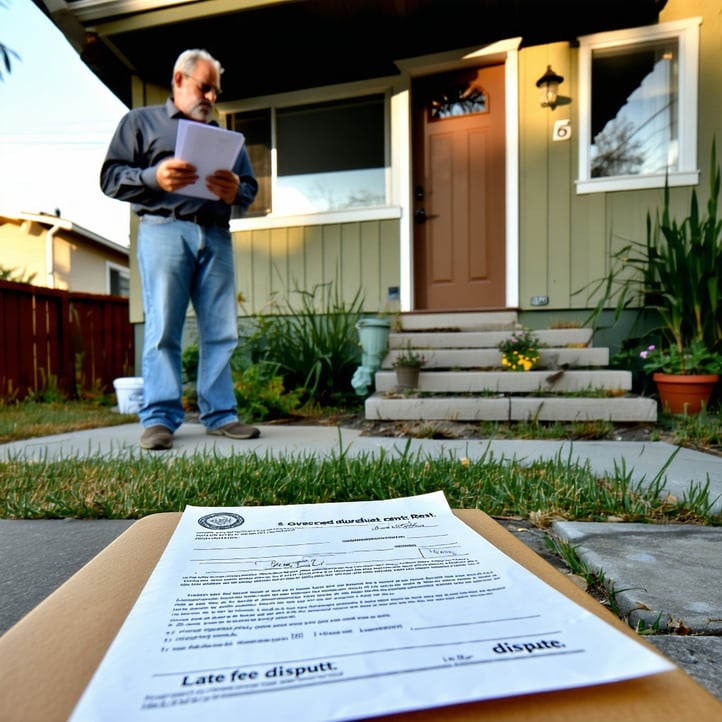
Let me tell you about an owner I'll call Mark. He is a composite of owners we have worked with, with the details changed, but the situation will feel familiar. Mark owned a home in the Carlsbad area, took a job out of state, and listed the house in the spring. Ninety days later he had two price cuts behind him and one lowball offer that made him laugh, and then made him a little sick. His agent wanted cut number three.
Instead, Mark asked a different question: what would this place rent for? We ran a real rent comp for him. Not a website estimate, an actual comparison against what similar homes in his neighborhood were renting for at that moment. The number surprised him. Rent would cover his mortgage, his ownership costs, and leave a small cushion, while the house kept doing what North County real estate has done for decades: quietly appreciate, with a tenant paying down his loan along the way.
Mark's story ends well, and I'll finish it below. But first, the framework he used, because it is the same one you should use.
The three questions that actually decide rent vs sell
1. What will it actually rent for? Everything downstream depends on this number, so do not guess and do not trust a one-click website estimate. Get a real rent comp built from current listings and recent lease-ups in your specific neighborhood. If the rent number is wrong, every other number in your decision is wrong.
2. Does the math work after real costs? Not just the mortgage. Vacancy between tenants, maintenance and repairs, property management, insurance, HOA dues, and the costs first-time landlords forget. We break those down in the next section. Put it all on paper before you decide anything.
3. Do you actually want to be a landlord? Be honest with yourself. The tenant calls, the screening rules, the California compliance load: it is a real job. It happens to be our job, and it can be delegated, but somebody has to do it, and it should not be you at eleven at night from another state.
Rent vs sell: the side-by-side
| Factor | Sell now | Rent it out |
|---|---|---|
| Cash today | Equity out at closing, minus commissions and closing costs | No lump sum; equity stays invested in the home |
| Monthly income | None | Rent, minus mortgage and operating costs |
| Price pressure | You accept today's buyer market, including the next price cut | You stop negotiating against yourself and let the market recover on your timeline |
| Long-term wealth | Ends with the sale | Appreciation continues and a tenant pays down your loan |
| Home-sale tax exclusion | Available now if you qualify | Preserved for roughly three years after you move out (details below) |
| Effort and risk | One transaction, then done | Ongoing landlord responsibilities, or a manager's fee to delegate them |
One honest note about advice sources: a listing agent only gets paid if you sell. Most agents are good people doing right by their clients, but it is worth remembering that "cut the price again" is the only lever their business model rewards. Nobody in the sell-side conversation is paid to show you the rental math. Make sure someone runs it before you take a price you will regret.
The tax window nobody tells frustrated sellers about
This is the fact that changed Mark's whole decision. When you sell a home you have lived in, federal law lets many owners exclude up to $250,000 of gain from tax, or up to $500,000 for a married couple filing jointly. To qualify, you generally must have owned the home and used it as your main residence for at least 2 of the 5 years ending on the sale date (IRS Topic 701 and Publication 523 have the full rules).
Read that timing rule again, because it is the key: 2 of the last 5 years. If you lived in the home for years and just moved out, you can rent it out for roughly three years and still sell with the exclusion intact. Renting does not have to mean renting forever. You can rent now, let a tenant carry the mortgage while the sales market recovers, and still sell inside the window with the tax break preserved.
Two important footnotes. First, if you are a military owner on qualified official extended duty, and North County has a lot of you, the IRS lets you suspend that 5-year test period for up to 10 years, which makes the rent-first path even more flexible. Second, the depreciation you claim during the rental years is treated differently at sale (the exclusion does not cover it; Publication 523 covers the rule). The takeaway is not "do the math yourself." The takeaway is: before you accept another price cut, ask your CPA how the exclusion window applies to your dates. For a lot of frustrated sellers, this one conversation turns "rent vs sell" into "rent now, sell smarter later."
What renting actually costs (the math most owners skip)
Renting out a home is not free money on top of a mortgage payment. A realistic monthly picture includes the mortgage, insurance (tell your carrier it is a rental; the policy changes), any HOA dues, property taxes, a maintenance allowance, and management if you delegate. Then add the occasional costs: vacancy days between tenants, make-ready work, leasing costs, and lease renewals.
Maintenance deserves its own line because it is the one owners underestimate most, and in California, slow repairs are not just a cost problem, they can become a legal one. We keep a funded reserve for every home we manage so small repairs get fixed the same day they come up, before they become big ones. If you want to pressure-test your own numbers, our guide to timely maintenance for rental properties shows how a small delay snowballs into a big bill.
If the honest math shows rent covering all of that with room to spare, you have a real rental. If it shows a monthly shortfall, that is not automatically a no. Some owners will happily carry a small negative for three years of appreciation, loan paydown, and a preserved tax exclusion. But you should choose that on paper, not discover it in month four.
The California reality check
California adds rules that a national rent-vs-sell article will never mention, and they matter more for a first-time landlord than for anyone else.
Security deposits are capped: since the 2024 change under Assembly Bill 12, most landlords can collect no more than one month's rent as a deposit (Civil Code Section 1950.5). Screening is governed by fair housing laws that are stricter than most owners realize, and applying your criteria inconsistently, even innocently, can create real legal exposure. Leases need California-specific addendums that change as new laws pass. None of this makes renting a bad idea. It makes winging it a bad idea.
This is also where the accidental landlord has one genuine advantage: you are not buying a rental, you already own it. Your entire risk is in execution, and execution is exactly the part that is delegable. If you inherited the home rather than moved out of it, the rules and the emotions are different enough that we wrote a separate guide: what to do when you inherit a rental property in California.
Ready to move from "should I" to "how do I"? Our step-by-step guide to renting out your house covers the process end to end, from rent comp to move-in day.
When selling is still the right call
I run a property management company, so you might expect me to say "always rent." I won't, because it is not true. Sell if you need the equity for your next home and carrying two properties would strain you. Sell if the honest rental math shows a shortfall you would resent every month. Sell if the home needs major systems work you do not want to fund from a distance. And sell if, after everything above, you simply do not want a tenant in your house, because an owner who resents the arrangement rarely enjoys the returns. The goal is not to rent at all costs. The goal is to make the decision with both doors open, instead of walking through the only door your listing agent showed you.
How Mark's story ended
Mark chose the second door. We photographed the house, listed it, offered showings seven days a week, and screened every application against the same written criteria, the way California fair housing law expects. It rented inside our 21-day target to a well-qualified tenant. Since 2018 we have collected 99.2 percent of the rent we have billed across the homes we manage, and we have never had an eviction. Mark's house is part of that track record now. Last time we spoke, the house he could not sell had become the best-performing thing he owns, and he still has his exclusion window if he decides to sell into a better market.
If you are staring at a price cut that feels wrong, do not guess. Run the numbers first. Our free Carlsbad Landlord's Profit Protection Kit walks you through the same math and the same California rules we walked Mark through, including a compliance checklist and a tax tracker built for rental owners. Grab it below, and if you would like our team to run a real rent comp on your home, the form works for that too.
Frequently asked questions
Should I rent or sell my house?
Rent it out if the realistic rent covers your mortgage and operating costs (or comes close enough that appreciation and loan paydown justify the gap), you do not need the equity immediately, and you are willing to be a landlord or hire one. Sell if you need the cash out, the math shows a shortfall you cannot carry, or you do not want the responsibilities at any price. Run a real rent comp before deciding either way.
What is an accidental landlord?
An accidental landlord is an owner who ends up renting out a home they never intended to be an investment property, most often because the home did not sell, they relocated for work or military orders, or they inherited it. It is increasingly common: a near-record share of single-family rentals coming on the market were previously listed for sale.
How long can I rent out my house and still avoid capital gains tax when I sell?
Under the federal home-sale exclusion, you generally must have used the home as your main residence for at least 2 of the 5 years ending on the sale date, which means many owners can rent for roughly three years after moving out and still qualify to exclude up to $250,000 of gain ($500,000 married filing jointly). Military owners on qualified official extended duty may suspend that 5-year window for up to 10 years. See IRS Topic 701 and Publication 523, and confirm your dates with your CPA.
What does it cost to rent out a house?
Budget for more than the mortgage: landlord insurance, property taxes, HOA dues, a maintenance allowance, leasing and management fees if you delegate, and vacancy between tenants. In California, also plan around the one-month security deposit cap under Assembly Bill 12, which puts more weight on thorough tenant screening.
Can I rent out my house if I'm moving out of state?
Yes, and out-of-area owners are a large share of the owners we work with. You will want local eyes on the property, a system for repairs you cannot supervise, and awareness of California requirements for out-of-state owners, such as Franchise Tax Board withholding on rental income. A local manager handles all of that day to day.
Raintree Property Management provides full-service property management for single-family homes and condos across North County San Diego, including Carlsbad, Encinitas, Oceanside, San Marcos, Vista, Escondido, Del Mar, and Solana Beach. CalDRE #02073946. Mark is a composite of owners we have worked with, with details changed. This article is general information for homeowners and rental owners and is not legal or tax advice; for guidance on your specific situation, consult your attorney or CPA.
Want a deeper reference for California landlord compliance, screening, and tax tracking? The Profit Protection Kit is a free four-document set: a CA compliance checklist, screening red-flags worksheet, rental tax tracker spreadsheet, and the current North County rental market snapshot. No phone call, no sales follow-up. Read at your pace.
Raintree Property Management, CalDRE 02073946.