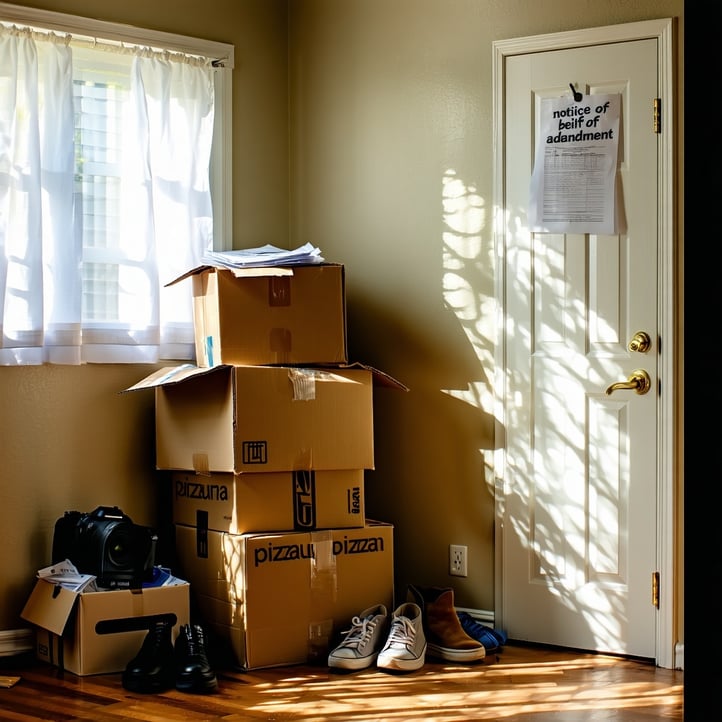
In California, your HOA almost certainly can't stop you from renting out your house. Since January 1, 2021, an association can't enforce a ban on renting against you, whether or not it has gotten around to rewriting its documents.
The short answer: Civil Code section 4741 says an owner isn't subject to a governing-document provision that prohibits renting, and it bars a cap below 25 percent of the units. Your association can still cap rentals at 25 percent or higher, still ban rentals of 30 days or less, and still require paperwork before your tenant moves in. We're property managers, not attorneys, so confirm your own documents with a California attorney.
Jump to a section:
The clause that cost Dana three weeks
What the statute says
What your HOA can and can't do
Why the clause in your binder is still there
If you have an ADU
What the association can still require
What the delay costs
The five steps before you list
The clause that cost Dana three weeks
I'll call her Dana, for the purpose of this post. She owns a house in an HOA community in Carlsbad, and her job was moving her out of the area. She wanted to keep the house and rent it. A week before she planned to list, she pulled out her CC&Rs and found a paragraph that read like a flat ban on leasing.
She assumed the plan was dead. So she emailed the board, waited, called the management company, waited again, and spent three weeks trying to get a straight answer about a clause that had no force. The board wasn't lying to her. Nobody had rewritten the document, and nobody had told her what the statute did to it.
Dana lost most of a month of rent to a sentence she never needed to worry about. That's the story of this post, and the rest of it covers what she should have checked first.
What the statute says
Civil Code section 4741(a) says an owner of a separate interest in a common interest development isn't subject to a provision in the governing documents that prohibits, or unreasonably restricts, renting or leasing that home, an accessory dwelling unit, or a junior accessory dwelling unit. Section 4741(b) adds a floor: an association can't adopt or enforce a rule that limits rentals to less than 25 percent of the separate interests. A higher percentage is allowed.
Section 4741(c) keeps one door open for associations. They can prohibit transient or short-term rental of 30 days or less. If you're thinking about renting by the week, this post doesn't apply to you. Everything here is about long-term leases.
Section 4740(a) protects a second group of owners. If you bought your home before the association adopted a rental ban, the ban doesn't apply to you, and section 4741(h) says the newer statute leaves that older right alone. A long-time owner is covered twice. A recent buyer is covered once, by 4741. Both land in the same place.
What your HOA can and can't do
| What the association wants to do | What the statute says |
|---|---|
| Ban renting altogether | Civil Code 4741(a): your association can't enforce a ban against you |
| Cap rentals below 25 percent of the units | Civil Code 4741(b): a cap under 25 percent isn't allowed |
| Cap rentals at 25 percent or higher | Allowed. 4741(b) permits a higher percentage, so you can land on a waitlist |
| Ban short-term rentals of 30 days or less | Allowed under 4741(c) |
| Count your ADU against the cap | Civil Code 4741(d) and (e): ADUs and junior ADUs don't count, and a unit you live in doesn't count as renter-occupied |
| Ask for your title date and your tenant's name and contact information | Allowed. Civil Code 4740(c) requires you to give both before you rent |
Find the rental paragraph in your documents first, then match it to a row.
Why the clause in your binder is still there
Section 4741(f) is the part most owners miss. It required associations to comply starting January 1, 2021, even if their governing documents hadn't been revised. It also required the board to amend the non-compliant language by July 1, 2022, with at least 28 days' general notice to members before approving the amendment.
Plenty of associations never made that cleanup. Their documents still print the old ban, and the managers who answer the phone still read it to you. So an owner who opens the binder today can be reading language that has been unenforceable for more than five years.
Don't pick a fight. Section 4741(g) provides that an association that willfully violates the section owes actual damages plus a civil penalty of up to $1,000, but a lawsuit is a bad way to start a tenancy in a community you'll deal with for years. Know the statute first, then send a calm email that cites it. If the board pushes back, call a California attorney before you do anything else.
If you have an ADU
North County owners have built a lot of ADUs, and the statute treats them well. Section 4741(d) says an ADU or junior ADU isn't a separate interest for this purpose, so it doesn't count against the cap. Section 4741(e) says a unit isn't counted as renter-occupied when the owner lives in it or in its ADU. If you live in the main house and want to rent the ADU, the rental cap isn't your obstacle. Permitting and the city's own rules are a different question, and they belong in a different post.
What the association can still require
Winning the legal question leaves the paperwork. Before you rent, section 4740(c) requires you to give the association verification of the date you acquired title and the name and contact information of your prospective tenant or their representative. Many associations also have a registration form, a move-in fee, and rules about parking, trash bins, and pets. Ask for the full list in writing.
Those rules land on your tenant, and the violation notices come to you. Put the rules in the lease as an addendum, hand the tenant a copy at signing, and send them any change the board adopts. Our post on building an air-tight lease covers what belongs in the lease document itself. For the day-to-day condo material, such as board politics and tenant registration, read our guide to condo management in North San Diego.
Cities add their own rules on top of the association's, particularly for short stays. Check your city's requirements before you list.
What the delay costs
Our target is to rent a home in 21 days. Dana's three weeks of emails used up that whole window before she had a single showing on the calendar. Every day a house sits empty comes out of your income, and the cost of an avoidable HOA back-and-forth is pure vacancy. Our post on achieving shorter vacancy cycles shows how to shrink the gap once you do list.
If you live out of the area, the problem gets harder, because you can't walk into the management office and ask. Our guide to managing rental property from out of state covers how owners handle it from a distance.
The five steps before you list
Do these in order, and do them before you pay for photos.
1. Pull your CC&Rs and every amendment, not just the original.
2. Find the rental provision and read it against the table above. A flat ban, a cap under 25 percent, a cap at 25 percent or higher, and a 30-day minimum are four different situations.
3. Ask the association in writing for its registration process, its fees, and its tenant rules.
4. Send your title date and your tenant's contact information before move-in, as section 4740(c) requires.
5. Attach the HOA rules to the lease as an addendum.
If you're still deciding whether to rent at all, start with our guide to how to rent out your house. The HOA check is step zero in that sequence. If your community is in Carlsbad, our Carlsbad property management page shows how we handle leasing there.
Frequently asked questions
Can my HOA stop me from renting out my house in California?
Not with a rental ban. Civil Code section 4741(a) says an owner isn't subject to a governing-document provision that prohibits, or unreasonably restricts, renting a separate interest, and section 4741(b) bars a cap below 25 percent of the units. An association can still cap rentals at 25 percent or higher and can still ban rentals of 30 days or less. Confirm what applies to your documents with a California attorney.
Is the rental ban in my CC&Rs still enforceable?
Section 4741(f) required compliance starting January 1, 2021, whether or not the association had rewritten its documents. It also required the board to amend non-compliant documents by July 1, 2022. A clause that still sits in your binder doesn't change what the statute says.
Can my HOA limit how many homes get rented?
Yes, within the floor. Section 4741(b) allows a cap as long as it isn't lower than 25 percent of the separate interests. If your community sits at its cap, expect a waitlist.
Can my HOA ban short-term rentals?
Yes. Section 4741(c) leaves the association free to prohibit transient or short-term rental of 30 days or less. This post covers long-term leases only.
Does my ADU count toward the HOA rental cap?
No. Section 4741(d) says an accessory dwelling unit or junior ADU isn't a separate interest for this purpose, and section 4741(e) says a unit isn't counted as renter-occupied when the owner lives in it or in its ADU.
What do I have to give my HOA before I rent?
Civil Code section 4740(c) requires you to give the association verification of the date you acquired title, plus the name and contact information of the prospective tenant or their representative. Send both before the tenant moves in.
What happens if an HOA enforces a rental ban anyway?
Section 4741(g) provides that an association that willfully violates the section is liable for actual damages plus a civil penalty of up to $1,000. Talk to a California attorney before you take any step against your association.
Raintree Property Management provides full-service property management for single-family homes and condos across North County San Diego, including Carlsbad, Encinitas, Oceanside, San Marcos, Vista, Escondido, Del Mar, and Solana Beach. CalDRE #02073946. We are property managers, not attorneys: this article is general information about California rental rules in common interest developments, not legal advice, and it doesn't address your governing documents. Confirm anything that matters with a qualified California attorney.
Want a deeper reference for California landlord compliance, screening, and tax tracking? The Profit Protection Kit is a free four-document set: a CA compliance checklist, screening red-flags worksheet, rental tax tracker spreadsheet, and the current North County rental market snapshot. No phone call, no sales follow-up. Read at your pace.
Raintree Property Management, CalDRE 02073946.